Current issue
Online first
Archive
About the Journal
Aims and scope
Publisher and Editorial
Advertising policy
Repository policy
Contact
Copyright
For Authors
Paper review procedures
Procedures protecting authentic authorship of papers
Paper preparation manual
Plagiarism check
Publication ethics
Reviewers
APC
Open Access Policy
Editorial and Scientific Board
Contact
Reviewers

Analysis of the quality of vehicle fleet data as input for modeling emissions and dispersion of pollutants emitted by combustion engine vehicles
1
Department of Mechanical Engineering, Wroclaw University of Science and Technology, Poland
Submission date: 2025-06-21
Final revision date: 2025-12-01
Acceptance date: 2026-01-06
Online publication date: 2026-01-15
Publication date: 2026-04-01
Corresponding author
Maria Skrętowicz
Department of Mechanical Engineering, Wroclaw University of Science and Technology, Wybrzeże Wyspiańskiego 27, 50-370, Wrocław, Poland
Department of Mechanical Engineering, Wroclaw University of Science and Technology, Wybrzeże Wyspiańskiego 27, 50-370, Wrocław, Poland
Combustion Engines 2026,205(2), 206-212
KEYWORDS
TOPICS
ABSTRACT
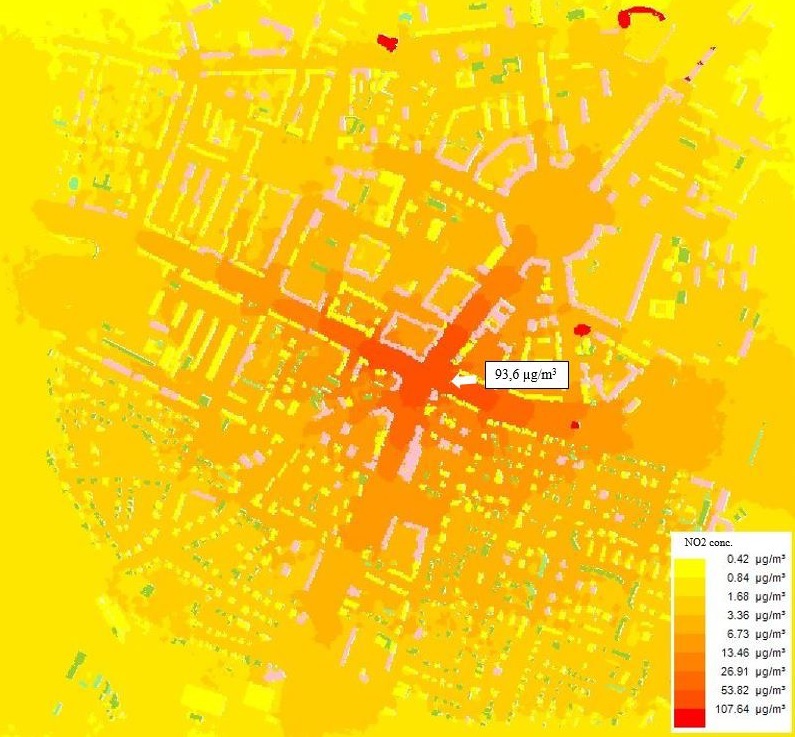
Reliable modeling of emissions and dispersion of pollutants emitted in exhaust gases from motor vehicles is highly challenging due to the presence of multiple variables and inconsistencies in input data quality across different stages of the process. This article focuses on the vehicle fleet. It has been demonstrated that the structure of the vehicle fleet in a given area varies depending on the data collection methods and sources, which ultimately determines the dispersion results. This issue becomes particularly significant in urban environments, where the intensity of road traffic is high, and ventilation conditions are often poor, partly due to the formation of street canyons by dense urban development. The modeling was conducted at a selected intersection in Wrocław for various fleet structure scenarios. The results were compared with the results of pollutant concentrations from a nearby air quality monitoring station. The Copert emission model and emission factors from the European EMEP/Corinair database were used. In contrast, the GRAL model, a CFD model (suitable for urban dispersion modeling), was used to simulate pollution dispersion.
REFERENCES (20)
1.
Alotaibi S, Almujibah H, Mohamed KAA. Towards cleaner cities: estimating vehicle-induced PM2.5 with hybrid EBM-CMA-ES modeling. Toxics. 2024;12:827. https://doi.org/toxics12110827.
2.
Angelis ED, Carnevale C, Di Marcoberardino G. Low emission road transport scenarios: an integrated assessment of energy demand, air quality, GHG emissions, and costs. T-ASE 2022; 19(1):37-47. https://doi.org/10.1109/TASE.2....
3.
De Nunzio G, Laraki M, Thibault L. Road traffic dynamic pollutant emissions estimation: from macroscopic road information to microscopic environmental impact. Atmosphere. 2021; 12(53). https://doi.org/10.3390/atmos1....
4.
German Environment Agency: HBEFA Traffic Situations. Application guidelines. 2025. https://doi.org/10.60810/openu....
5.
Heni L, Haj-Salem H, Lebacque J-P. Integration and Comparative Analysis of COPERT and HBEFA emission models coupled with the BIDIM-GSOM traffic model for large-scale networks. Transp Res Proc. 2025;86:361-370. https://doi.org/10.1016/j.trpr....
6.
Jurkovic M, Kalina T, Skrucany T. Environmental impacts of introducing LNG as alternative fuel for urban buses – case study in Slovakia. Promet – Traffic&Transportation. 2020;32(6):837-847. https://doi.org/10.7307/ptt.v3....
7.
Lindhjem CE, Pollack AK, DenBleyker A. Effects of improved spatial and temporal modeling of on-road vehicle emissions. J Air & Waste Manage Assoc. 2012;62(4):471-484. https://doi.org/10.1080/109622....
8.
Ma S, Tong D, Harkins C. Impacts of on‐road vehicular emissions on U.S. air quality: a comparison of two mobile emission models (MOVES and FIVE). J Geophys Res Atmospheres. 2024;129(20). https://doi.org/10.1029/2024JD....
9.
Ministry of Climate and Environment: ‘National balance of SO2, NOx, CO, NH3, NMLZO, heavy metals and TZO emissions for the years 1990–2022. Summary report. Warsaw 2024.
10.
Oanh NTK, Huy LN, Permadi DA. Assessment of urban passenger fleet emissions to quantify climate and air quality co-benefits resulting from potential interventions. Carbon Management. 2018;9(4):367-381. https://doi.org/10.1080/175830....
11.
Oettl D. Quality assurance of the prognostic, microscale wind-field model GRAL 14.8 using wind-tunnel data provided by the German VDI guideline 3783-9. J Wind Eng Ind Aerodyn. 2015:142:104-110. https://doi.org/10.1016/j.jwei....
12.
Orth S, Russel AG. Assessment of light-duty versus heavy-duty diesel on-road mobile source emissions using general additive models applied to traffic volume and air quality data and COVID-19 responses. J Air & Waste Manage Assoc. 2023;75(5):374-393. https://doi.org/10.1080/109622....
13.
Polish Association for New Mobility: ‘Report: Transport air pollution. Strategies for measuring and reducing transport emissions – actions from local to national level’, Warsaw 2024.
14.
Reyna JL, Chester MV, Ahn S. Improving the accuracy of vehicle emissions profiles for urban transportation greenhouse gas and air pollution inventories. Environ Sci Technol. 2014;49(1):369-376. https://doi.org/10.1021/es5023....
15.
Shi Q, Ciais P, Megel N. High spatiotemporal resolution traffic CO₂ emission maps derived from floating car data (FCD) for 20 European cities (2023). Earth Syst Sci Data Discuss.2025; in review. https://doi.org/10.5194/essd-2....
16.
Szczotka A, Puchałka B, Bielaczyc P. Influence of drivers’ driving style on the uncertainty of measurements of exhaust emissions on a chassis dynamometer. AUTOBUSY – Technika, Eksploatacja, Systemy Transportowe. 2018;19(12):675-679. https://doi.org/10.24136/atest....
17.
Wang L, Chen X, Xia Y. Operational data-driven intelligent modelling and visualization system for real-world, on-road vehicle emissions – a case study in Hangzhou City, China. Sustainability. 2022;14(9):5434. https://doi.org/10.3390/su1409....
18.
web.jrc.ec.europa.eu/policy-model-inventory/explore/models/model-copert/ (accessed on 2025-12-01).
19.
Xu J, Wang J, Hilker N. Comparing emission rates derived from a model with those estimated using a plume-based approach and quantifying the contribution of vehicle classes to on-road emissions and air quality. J Air & Waste Manage Assoc. 2018;68(11):1159-1174. https://doi.org/10.1080/109622....
20.
Yu C, Yang X, Mu J. A systematic review of urban road traffic CO2 emission models. Carbon Footprints. 2025;4:17:1-23. https://doi.org/10.20517/cf.20....
Share
RELATED ARTICLE
| eISSN: | 2658-1442 |
| ISSN: | 2300-9896 |


The scientific journal is financed under the Agreement 185/WCN/2019/1 from the funds of the Minister of Science and Higher Education
© 2006-2026 Journal hosting platform by Bentus
We process personal data collected when visiting the website. The function of obtaining information about users and their behavior is carried out by voluntarily entered information in forms and saving cookies in end devices. Data, including cookies, are used to provide services, improve the user experience and to analyze the traffic in accordance with the Privacy policy. Data are also collected and processed by Google Analytics tool (more).
You can change cookies settings in your browser. Restricted use of cookies in the browser configuration may affect some functionalities of the website.
You can change cookies settings in your browser. Restricted use of cookies in the browser configuration may affect some functionalities of the website.